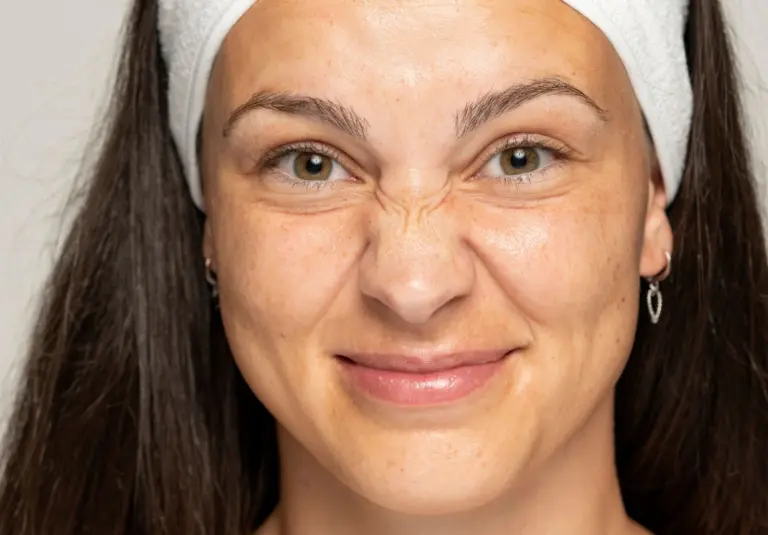
Fine facial lines are often associated with the forehead, eyes, or mouth, where movement is most noticeable when we frown, smile, or squint. But there is one subtle wrinkle that appears closer to the centre of the face, often developing gradually until it becomes visible even when we are at rest. This is the bunny line.
These fine lines form across the bridge of the nose during movement and are usually the result of repeated contractions in the nasalis muscle. While they may seem minor, they can offer insight into how the face is ageing and how surrounding muscles are compensating for each other over time.
Although subtle, bunny lines are often addressed as part of a broader facial rejuvenation plan. Treatments that support smoother movement, improve skin elasticity, or restore hydration to ageing skin may all play a role. This can include wrinkle-relaxing injections, skin boosters, or non-invasive skin tightening techniques that work together to soften expression lines and support long-term skin quality.
What Are Bunny Lines?
Bunny lines, also called bunny wrinkles, are small, diagonal lines that appear on either side of the nose. They become visible during certain facial expressions, such as smiling, squinting, or wrinkling the nose. These are dynamic wrinkles, meaning they are caused by repeated muscle movement, not static ageing alone.
The nasalis muscles, located across the bridge of the nose, are primarily responsible. When these muscles contract repeatedly, lines can begin to form in the skin that sits above them. With age, sun exposure, and reduced collagen production, the skin becomes less resilient, making these lines more permanent.
Why Bunny Lines Are More Common Than You Think
The reason some people develop bunny lines more noticeably than others often comes down to facial habits and muscle compensation. Every person uses their facial muscles slightly differently based on natural expression patterns and inherited anatomy.
In some cases, bunny lines become more noticeable after treating nearby areas, such as glabellar lines or crow’s feet. This happens when the treated muscles relax, and surrounding muscles, like those in the nose, begin to contract more strongly in response. This interrelationship between facial muscles is a key concept in facial anatomy and modern aesthetic planning.
External Factors That Make Lines More Prominent
In addition to natural expression, there are lifestyle and environmental factors that contribute to the development of bunny lines. These include:
- Repetitive facial expressions involving the nose
- Sun exposure, which reduces collagen and elastin in the skin
- Dehydrated or undernourished skin
- Lack of a consistent skincare routine
- Natural ageing, which reduces skin elasticity and volume
These factors can also influence the appearance of other facial lines, such as nasolabial wrinkles, perioral lines, and forehead lines.
Why Muscle Movement Matters
Understanding the role of muscle movement in wrinkle formation is essential for long-term facial rejuvenation. The muscles in the face do not work in isolation. The nasalis muscle works alongside others, including the frontalis, orbicularis oculi, and muscles around the mouth and cheeks.
When one group of muscles is relaxed, others may activate more intensely. This is often seen when bunny lines become more pronounced after addressing other expression areas. These shifts in muscle activity should always be considered when developing an aesthetic treatment plan.
Treatment Options for Bunny Lines
Although subtle, bunny lines can be addressed using a targeted approach. Wrinkle-relaxing injections can reduce the activity of the nasalis muscle, softening the appearance of the lines without affecting the rest of the face.
Additional options to support this area include:
- Skin boosters to improve hydration, elasticity, and skin texture
- Dermal fillers in adjacent areas to support mid-face structure
- Laser resurfacing or skin tightening to improve surface quality
- Skincare support for sun-damaged or collagen-depleted skin
Each of these treatments works in a different way. When combined thoughtfully, they can restore balance and prevent deeper lines from forming over time.
A Medical Approach at HAVA Aesthetics
At HAVA Aesthetics in Surrey, Dr Hadeel Nimaa provides a holistic approach to facial assessment and expression-based concerns. Rather than focusing on isolated areas, her treatment plans consider how muscle movement, skin condition, and facial structure interact as a whole.
In cases where bunny lines appear alongside crow’s feet, glabellar tension, or a gummy smile, Dr Nimaa uses her knowledge of facial anatomy to create a personalised plan. The goal is always to achieve a smooth and natural-looking result without compromising movement or facial identity.
Is Prevention Possible?
While dynamic lines are a natural part of expression, there are steps that can help prevent them from becoming deeper over time:
- Use daily sun protection to reduce UV-related collagen breakdown
- Maintain skin hydration with a good routine and plenty of water
- Consider early skin treatments to support elasticity and skin resilience
- Avoid repeated scrunching movements, especially in bright light
- Support long-term skin health with skin boosters or collagen-stimulating options
It is also worth being mindful of how the face changes after aesthetic treatments. If a new set of lines begins to appear in one area, it may be a sign that surrounding muscles are taking on additional movement.
Final Thoughts
Bunny lines may be subtle, but they are an important signpost in the broader story of how the face moves and ages. They offer valuable insight into facial muscle dynamics, how nearby treatments might influence expression, and what options are available to support the skin over time.
With a medically guided approach, it is possible to soften these lines, support surrounding structures, and maintain a natural result that reflects your expression, not your age.
Back to blog